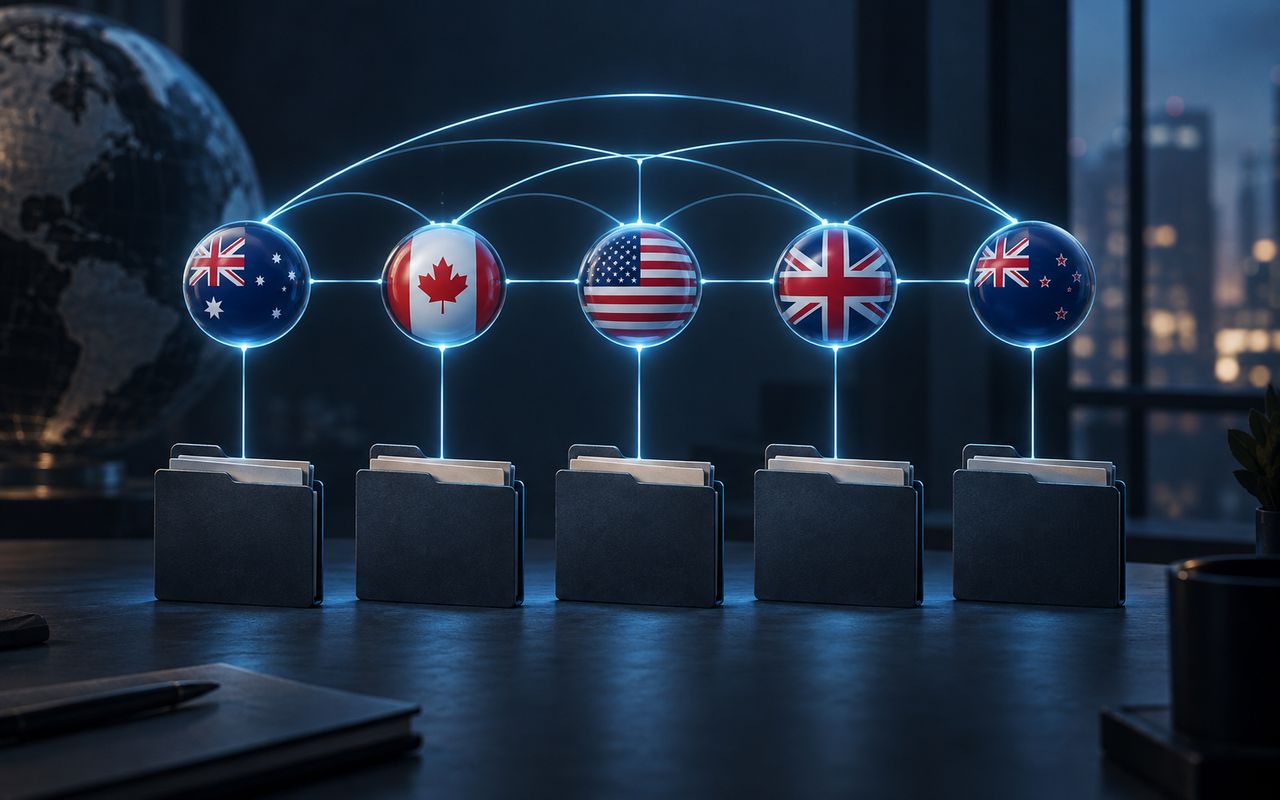
What is Five Eyes?
UK intelligence sources describe Five Eyes as the partnership between Australia, Canada, New Zealand, the United Kingdom and the United States. The relationship is relevant when considering government access and intelligence sharing.
But “Five Eyes VPN” is not a technical finding. The partnership does not tell you which app traffic is routed, which account fields exist, whether connection metadata is retained, or what a particular assurance engagement examined.
Why are country-only rankings too simple?
Several separate questions are often collapsed into one flag icon:
- Which legal entity contracts with the subscriber?
- Which entity controls account, payment, support and diagnostic data?
- What laws and legal processes apply to that entity and user?
- What does the architecture make available to the operator?
- What did a named assessor test, and when?
A provider outside the partnership can still collect extensive data or publish no independent evidence. A provider inside it may design systems that retain less, although legal exposure may still matter for a particular user. Neither conclusion follows from location alone.
How should you use the information?
Include jurisdiction in a threat model, especially if government access is a specific concern. Then connect the country fact to a precise legal and technical question. Avoid claims that one country is universally “privacy-friendly,” that Five Eyes membership automatically defeats a no-logs design, or that being outside a commonly used list makes a user untraceable.
When a review mentions Nine Eyes or Fourteen Eyes, ask for the primary source and the exact implication being claimed. A partnership label is context; the provider’s live legal documents and system evidence remain necessary.